
Yesterday, while I was washing the dishes, a simple yet deeply revealing thought came to my mind, one of those realizations that arrive without noise but reorganize something inside you, and I suddenly understood why connecting with the body is so essential, especially when I notice myself trapped in my thoughts, moving endlessly between the past and the future, both of them usually loaded with dark narratives, anticipation, fear, and emotional weight that pull me away from the only place where life is actually unfolding.
When the mind travels to the past, it often does so carrying unresolved pain and emotionally charged memories, and when it projects itself into the future, it tends to construct hypothetical scenarios full of imagined dangers, and in both cases, the present moment quietly disappears, leaving us living everywhere except where we truly are.
The body lives in the only real time
Since I entered the world of meditation, whether through sound, silence, or different contemplative practices, something fundamental became clear to me, and that is that the body breathes, feels, and exists exclusively in the present moment.
This understanding is shared not only by neuroscience, but also by ancient wisdom traditions.
The Buddha taught that suffering arises when the mind clings to what was or grasps at what is not yet, and that liberation becomes possible only through mindful awareness of what is happening now, beginning with the body and the breath.
In the Satipatthana Sutta, the body is described as the first foundation of mindfulness, not as a philosophical idea, but as a direct gateway to awakening.
Rumi expressed this same truth through poetry when he wrote, “Why are you busy with this or that or good or bad, pay attention to how things blend.”
His invitation was never to escape life, but to enter it fully, to meet reality where it is happening, not where the mind narrates it.
From a neuroscientific perspective, this is not symbolic language.
Our nervous system processes reality through immediate sensory input, through interoception and proprioception, and when attention is anchored in bodily sensation, regions such as the insula and the somatosensory cortex become active, while the default mode network, associated with rumination, self-referential thinking, and mental time travel, begins to quiet down.
The body, in poetry, in science, and in contemplative practice, is where presence becomes accessible.
Habiting the body as a daily discipline
Now, when I wake up in the morning, before even drinking my first cup of coffee, I consciously try to leave everything I was carrying from yesterday aside, gently reminding myself again and again to bring my attention back to what is here, to what is alive, to what is real.
This is not about achieving mental silence or a permanent state of calm, because psychology, neuroscience, and Buddhism all agree on something essential: the mind produces thoughts by its very nature.
The Buddha never taught the elimination of thought, but the end of identification with it.
Rumi pointed to the same direction when he said, “Set your life on fire. Seek those who fan your flames.”
This fire is not mental agitation, but presence, the aliveness that appears when we are no longer fragmented between yesterday and tomorrow.
Habiting the body becomes a daily discipline not because the mind stops moving, but because the return to the present becomes more natural and less dramatic over time.
Neuroplasticity shows us that repeated states gradually become traits, and each return strengthens neural pathways associated with regulation, awareness, and choice.
In Taoism, this appears as a return to what is natural and unforced, to the state of wu wei, where life flows without excessive mental interference.
The present as the only place for action
The present moment is the only place where action is possible, because it is the only place where we can respond instead of react, and where we can choose not to bring more past into the present and therefore unconsciously repeat it into the future as destiny.
From a medical and psychophysiological perspective, chronic stress and anxiety are deeply linked to a nervous system that is constantly oscillating between memory and anticipation.
When the body perceives safety in the present moment, parasympathetic activity increases, vagal tone improves, cortisol levels decrease, and the organism gradually shifts from survival into regulation and repair.
Rumi captured this shift beautifully when he wrote, “Where there is ruin, there is hope for a treasure.”
The ruin is often the collapse of our mental constructions, and the treasure is what becomes visible when we finally arrive in the present.
The mind is not the enemy
There were many moments in my life when I truly believed that my mind was working against me, and I say this now with tenderness, because today I understand it differently.
The mind does not hate us, it is trying to protect us.
From an evolutionary and biological perspective, the mind developed to anticipate danger and ensure survival, but when this function remains permanently active in a world that no longer requires constant vigilance, it generates endless catastrophic hypotheses that the body experiences as real.
Carl Jung expressed this clearly when he wrote, “Until you make the unconscious conscious, it will direct your life and you will call it fate.”
Much of what we experience as suffering arises from unconscious patterns repeating themselves.
Rumi echoed this inner psychology centuries earlier when he said, “Yesterday I was clever, so I wanted to change the world. Today I am wise, so I am changing myself.”
The work is inward, embodied, and present.
Attention, the body, and conscious integration
This is why, when I guide meditation with tuning forks and invite attention to move slowly through each part of the body, noticing vibration, sensation, and subtle movement, it is not symbolic language or spiritual ornamentation.
It is a direct application of sustained attention, somatic awareness, and nervous system regulation.
Neuroscience shows that where attention goes, neural firing follows, and where neural firing repeats, structure changes.
Buddhism teaches that where attention rests, the mind is shaped.
Taoism teaches that where attention softens, life reorganizes itself.
Rumi simply said, “Stop acting so small. You are the universe in ecstatic motion.”
Presence allows that motion to be felt, not imagined.
Revisiting the past from the safety of the present
There are moments when memories from my childhood arise, moments when I was an unprotected child, and suffering appears almost automatically, but when I consciously bring those memories into the present, where I am now an adult with adult resources, the experience begins to transform.
From a trauma-informed psychological perspective, healing does not come from erasing memory, but from changing the relationship we have with it.
Jung spoke about integration rather than elimination, about allowing the shadow to be seen so that it no longer governs from the darkness.
Rumi expressed this same movement toward wholeness when he wrote, “The wound is the place where the light enters you.”
The wound does not disappear, but it no longer defines the entire landscape.
The only ending that truly heals
The mind often repeats painful patterns because they are familiar, or because it unconsciously hopes to finally give them a different ending, but repetition alone does not bring resolution.
The only happy ending we can truly give ourselves carries our own name.
The mind is a tool, an extraordinarily effective one, but not one that needs to be used at every moment.
Learning to place it gently back in its place is a path shared by neuroscience, psychology, Buddhism, Taoism, and the mystical poetry of Rumi.
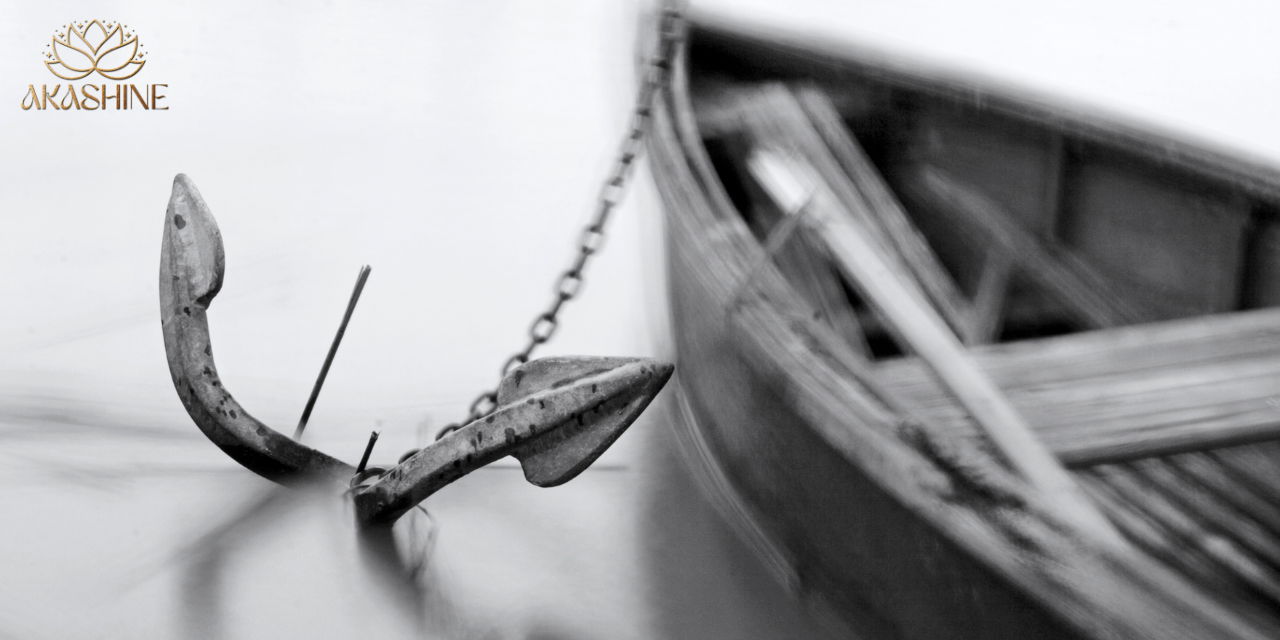
My anchor on that path is the present.
My tool is the body.
And every time I return to it, even on the days when motivation is low or concentration feels difficult, I am choosing to live this life from the only place where it can truly be lived.