
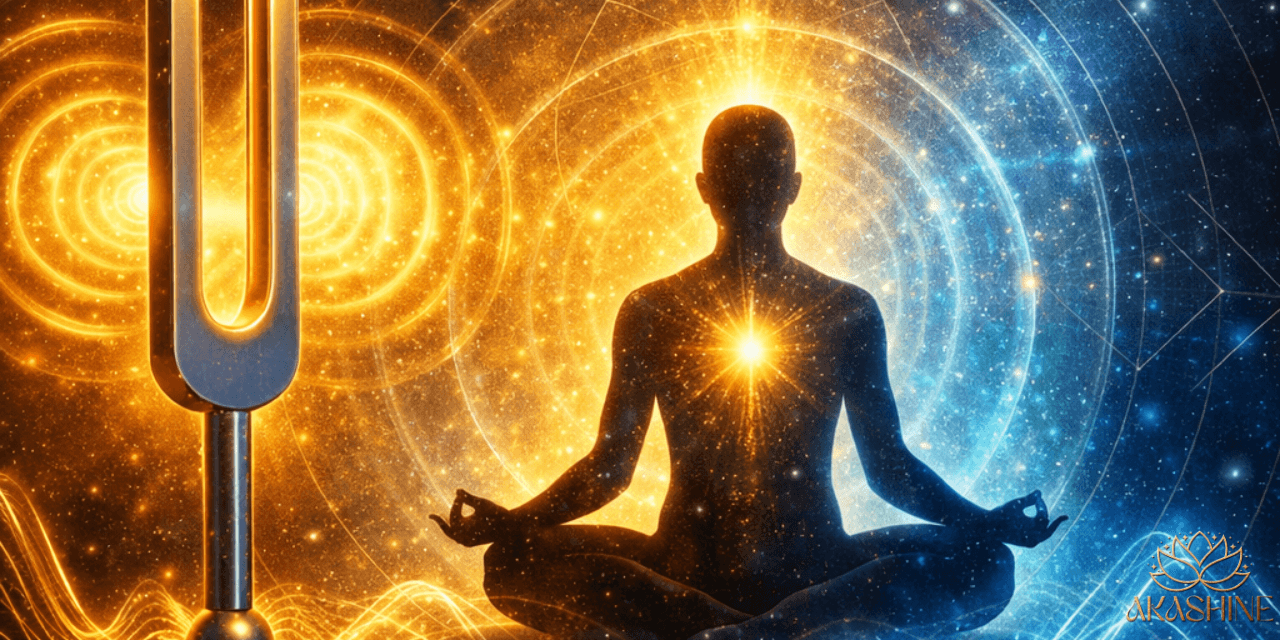
The modern human paradox: longing for transcendence without dogma
The modern human lives within an extraordinary paradox, because while technological evolution has provided comfort, speed, and an unprecedented access to knowledge, it has also intensified a silent existential thirst that no technological advancement seems capable of satisfying, and that thirst is the desire to experience something greater than the purely material reality that defines most contemporary cultural frameworks.
For centuries, transcendental experiences were almost exclusively associated with religious structures, rituals, or spiritual traditions that required belief systems often rooted in authority, faith, or symbolic cosmologies that could not always be explained through empirical observation, and as science expanded, particularly since the Cartesian separation between mind and body, spirituality was progressively relegated to the realm of the irrational or subjective, creating a fracture in human understanding that still shapes our perception of consciousness today.
However, neuroscience, quantum physics, and somatic psychology are slowly dissolving this division, revealing that the human organism is not merely a biological machine operating through chemical reactions, but rather a dynamic system of oscillatory patterns where perception, emotion, and awareness emerge through vibrational processes that can be studied, measured, and influenced.
Within this emerging paradigm, sound, resonance, and vibrational therapies such as tuning forks are attracting growing scientific interest, not because they confirm ancient spiritual traditions blindly, but because they provide a bridge where experiential transcendence becomes accessible without requiring dogmatic belief, allowing individuals to explore altered states of perception through measurable physiological mechanisms.
Resonance as a universal organizing principle in biology and physics
Resonance is not simply a metaphorical concept often used in spiritual discourse, but rather a fundamental physical phenomenon observed throughout the universe, where oscillating systems tend to synchronize when exposed to compatible frequencies, a principle that governs everything from planetary orbits to neural synchronization inside the human brain.
Research in biophysics has demonstrated that the human body functions as a complex network of oscillators, where cellular communication, heart rhythm variability, and brainwave coherence all operate through vibrational signaling, suggesting that health itself can be partially understood as the harmonious synchronization of internal frequencies.
One of the most studied examples is the phenomenon of neural entrainment, where external rhythmic stimuli such as sound or vibration influence brainwave activity, and studies using electroencephalography have shown that specific auditory frequencies can facilitate transitions between beta, alpha, theta, and delta brainwave states, each associated with different levels of cognitive processing, relaxation, and emotional integration.
Additionally, research conducted within the field of vibroacoustic therapy has indicated that low-frequency sound stimulation can modulate autonomic nervous system activity, promoting parasympathetic activation, which is associated with restoration, emotional processing, and cellular repair mechanisms, providing a physiological explanation for why many individuals report profound emotional or introspective experiences when exposed to sustained vibrational fields.
When tuning forks are applied to the body, they introduce localized mechanical vibration that interacts with fascia, bone conduction pathways, and proprioceptive sensory receptors, allowing vibration to travel through dense connective tissues that function as communication networks within the body, potentially influencing muscular tension patterns and somatic memory storage.
The body as a gateway to transcendental perception
While transcendence is often imagined as a purely mental or spiritual phenomenon detached from physicality, emerging somatic psychology suggests that altered states of awareness frequently emerge through bodily regulation rather than cognitive effort, revealing that the body is not a passive container for consciousness, but rather an active gateway through which expanded perception becomes accessible.
Trauma research, particularly through the work of scientists studying implicit memory, demonstrates that emotional experiences are frequently stored as sensory and physiological imprints within the nervous system, meaning that certain vibrational stimuli can activate emotional processing pathways that bypass analytical thinking and allow subconscious material to surface gently.
Tuning forks create a unique sensory input that combines auditory perception with tactile vibration, stimulating multiple neural pathways simultaneously, which may facilitate integrative experiences where emotional, cognitive, and somatic awareness converge, often producing states described as deeply introspective, timeless, or profoundly peaceful.
This dual stimulation aligns with the concept of interoception, the brain’s ability to perceive internal bodily sensations, which modern neuroscience recognizes as essential for emotional regulation and self-awareness, suggesting that vibrational therapies may strengthen the brain’s capacity to interpret internal signals, leading to greater psychological coherence.
The convergence between ancient vibrational traditions and modern scientific observation
Across ancient civilizations, sound was frequently described as the creative force that organizes matter, appearing in Egyptian cosmology, Vedic traditions, and Greek philosophical teachings, where vibration was associated with harmony, balance, and the structural organization of reality.
While these traditions were often symbolic, modern physics has demonstrated that matter itself can be understood as vibrational energy condensed into stable forms, and experiments in cymatics, where sound frequencies create geometric patterns in physical mediums such as water or sand, visually illustrate how vibration organizes physical structures through frequency-dependent patterns.
Water, which composes approximately seventy percent of the human body, is particularly sensitive to vibrational influence, and research exploring acoustic wave propagation in biological fluids suggests that mechanical sound stimulation can influence molecular organization and cellular communication, providing intriguing possibilities regarding how sustained vibrational exposure might influence physiological regulation.
Although more research is needed to fully understand these mechanisms, the growing intersection between acoustic science, cellular biology, and neuroscience is validating the idea that vibrational environments may influence biological coherence, offering a scientific foundation that resonates with ancient sound healing practices.
Why tuning forks can facilitate transcendental experiences without belief systems
One of the most fascinating aspects of tuning forks is that they do not require symbolic interpretation or spiritual ideology to produce perceptual shifts, because their effects originate from direct sensory stimulation that influences nervous system regulation and neural synchronization through measurable physical processes.
When individuals experience states of deep relaxation, expanded awareness, or emotional release during sound sessions, these experiences often emerge spontaneously as the nervous system transitions from survival-oriented patterns toward integrative parasympathetic states, suggesting that transcendence may arise not through imposed belief, but through physiological coherence.
This perspective aligns with contemporary research on flow states, meditation neuroscience, and breathwork studies, where altered consciousness frequently emerges when cognitive control decreases and sensory awareness increases, highlighting the importance of experiential practices that engage the body rather than relying solely on conceptual frameworks.
The integration of experience as the true transformation process
Perhaps the most misunderstood aspect of vibrational practices is the expectation that transformation occurs during the sound session itself, when in reality many neuropsychological processes activated by sensory regulation unfold during the integration phase, where the brain reorganizes emotional and cognitive patterns based on newly established neural connections.
Studies in neuroplasticity demonstrate that the brain continuously rewires itself in response to sensory input and emotional experience, suggesting that vibrational therapies may function as catalysts that temporarily alter neural dynamics, allowing the nervous system to reorganize habitual stress responses into more adaptive regulatory patterns.
This integration process explains why individuals sometimes report delayed emotional clarity, spontaneous insights, or changes in perception hours or days after vibrational sessions, reinforcing the importance of allowing space for reflection, embodiment, and conscious awareness following sound-based practices.
Toward a new paradigm of conscious exploration through vibration
Humanity is gradually moving toward a paradigm where transcendence is no longer defined by external authority or metaphysical belief alone, but rather by direct experiential exploration supported by scientific observation, creating a bridge between rational inquiry and inner discovery.
Tuning forks represent one of many tools that operate within this emerging framework, offering individuals an accessible method to explore consciousness through sensory interaction, nervous system regulation, and vibrational coherence, without requiring adherence to specific philosophical or spiritual systems.
As science continues to explore the relationship between vibration, consciousness, and biological organization, it becomes increasingly evident that the human search for transcendence is not separate from physiology, but deeply rooted within the body’s capacity to resonate, adapt, and reorganize itself in response to harmonic stimulation, suggesting that perhaps transcendence has never been something distant or mystical, but rather an intrinsic property of human perception waiting to be accessed through awareness and resonance.