
The universe is not made of things, but of becoming
Everything in existence is moving, shifting, unfolding. The galaxies are spiraling, the Earth is spinning, your cells are dying and being reborn right now. Physicist David Bohm, one of the most profound thinkers of the 20th century, argued that the universe is a “holomovement”—a single, unified field in constant flow, where even what appears to be solid is simply a momentary expression of a deeper, invisible dance. Nothing is static. Not even the self we think we are.
We are not separate from this movement. We are it.
Every breath you take is part of a greater symphony of transformation. When we resist change, we resist the fundamental nature of reality. Change is not failure. Change is how life expresses intelligence.
Psychological metamorphosis: from fragmentation to wholeness
Carl Jung understood this intimately. He saw that humans are not born whole, but fragmented—split between the conscious identity we show the world and the unconscious self we hide, repress, or deny. Transformation, in Jungian terms, is not about becoming someone else. It is about becoming who you truly are by integrating all that you have disowned.
This process, which he called individuation, is often triggered by suffering. A crisis, a betrayal, a loss—it forces us to confront the limits of our current identity. These moments can feel like death, and in a symbolic sense, they are. Something must die for something new to emerge. Like the myth of the phoenix, we must burn to rise.
Modern psychology echoes this in other ways. Abraham Maslow initially believed the pinnacle of human development was self-actualization. But later in life, he added a higher stage: self-transcendence. True transformation, he realized, is not just about realizing our potential—it is about going beyond the self, touching something greater, something sacred.
The wisdom of ancient philosophy: everything flows
Long before neuroscience or psychotherapy, the Greek philosopher Heraclitus taught that “everything flows” (panta rhei). You cannot step into the same river twice, he said, because both you and the river have already changed. For Heraclitus, reality was fire: ever-burning, ever-moving. To deny change is to deny the very fire of life.
The Stoics, too, believed in aligning with the flow of nature. Marcus Aurelius wrote in his Meditations: “Observe constantly that all things take place by change, and accustom yourself to consider that the nature of the universe loves nothing so much as to change the things which are and to make new things like them.”
Change is not chaos. It is cosmic rhythm.
Nature speaks in symbols: the caterpillar and the chrysalis
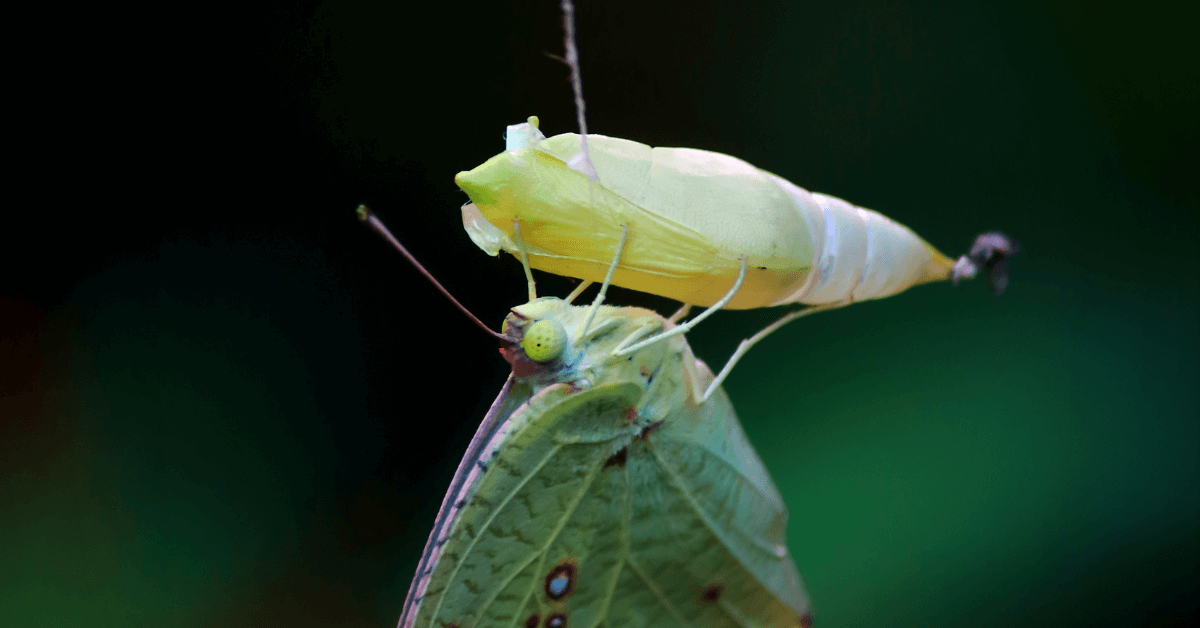
Perhaps the most powerful metaphor for transformation comes not from books, but from nature itself. The caterpillar does not simply grow wings and fly. It enters the chrysalis, where it dissolves entirely into a formless goo. Inside, imaginal cells awaken—cells that hold the blueprint of the butterfly. These cells existed all along but were dormant, waiting for the right moment.
Your soul holds imaginal codes too.
You may feel like everything is falling apart. But sometimes, disintegration is not destruction—it is preparation. You are not lost. You are becoming.
In many shamanic traditions, this symbolic death and rebirth is honored through rites of passage. The person who enters the ritual is not the one who comes out. Identity is shed. The false self dies so that the soul can speak. These rites reflect a deep truth: transformation is sacred, and it often begins in darkness.
Science supports transformation: the brain can change
Neuroplasticity has revolutionized our understanding of the human brain. For decades, scientists believed that the brain was fixed after a certain age. We now know this is false. Our brain can rewire itself throughout life. New thoughts can create new neural pathways. Old patterns can dissolve. Trauma can be healed. Identity is not a prison. It is a process.
This is not just spiritual optimism. It is scientific reality.
The work of neuroscientists like Dr. Joe Dispenza bridges this gap between science and transformation. He shows how changing our thoughts, emotions, and inner focus can lead to measurable changes in the brain and body. In his research, meditation and intentional focus have been shown to reprogram the autonomic nervous system and promote deep healing.
Transformation is not wishful thinking. It is biologically possible.
Spiritual traditions: death is not the end, but a beginning
Across spiritual traditions, transformation is not a punishment, but a passage.
In Buddhism, change (anicca) is one of the three marks of existence. To cling to anything—identity, pleasure, pain—is to suffer. Freedom comes when we let go and allow life to unfold.
In mystical Christianity, the dark night of the soul is a period of intense inner purification. It may feel like divine absence, but it is the soul being stripped of illusions. It is not darkness that harms us, but the refusal to enter it.
In the Egyptian mythos, the scarab beetle—a symbol you may recognize—represented resurrection and the movement of the sun. The dung beetle rolling the ball of life symbolized the daily rebirth of the soul. From decay, comes renewal.
In all these paths, transformation is not only expected—it is revered.
Nothing is wrong with you if you are changing
We live in a world that rewards consistency, praises linear progress, and fears contradiction. But the soul does not grow in straight lines. It spirals. It revisits. It cracks and reforms.
You are not meant to stay the same.
You are allowed to shift, to question, to evolve. You are allowed to leave behind identities that no longer feel true. You are allowed to grow wings even if the world remembers you as a caterpillar.
To transform is not betrayal. It is honesty.
To change is not instability. It is alignment with truth.
To evolve is not rejection of who you were—it is the natural blooming of who you always were beneath the layers of survival.
Trust the sacred impulse to become
If you are in a season of change, do not rush to fix yourself. Do not shame the unraveling. Let it speak. Let it soften you. Let it guide you. Because somewhere within, your imaginal cells are awakening.
This is not the end. This is the chrysalis.
The impulse to transform is not a mistake. It is the universe remembering itself through you.
You are not falling apart. You are returning to your essence.
And nothing could be more natural, more holy, or more alive than that.