
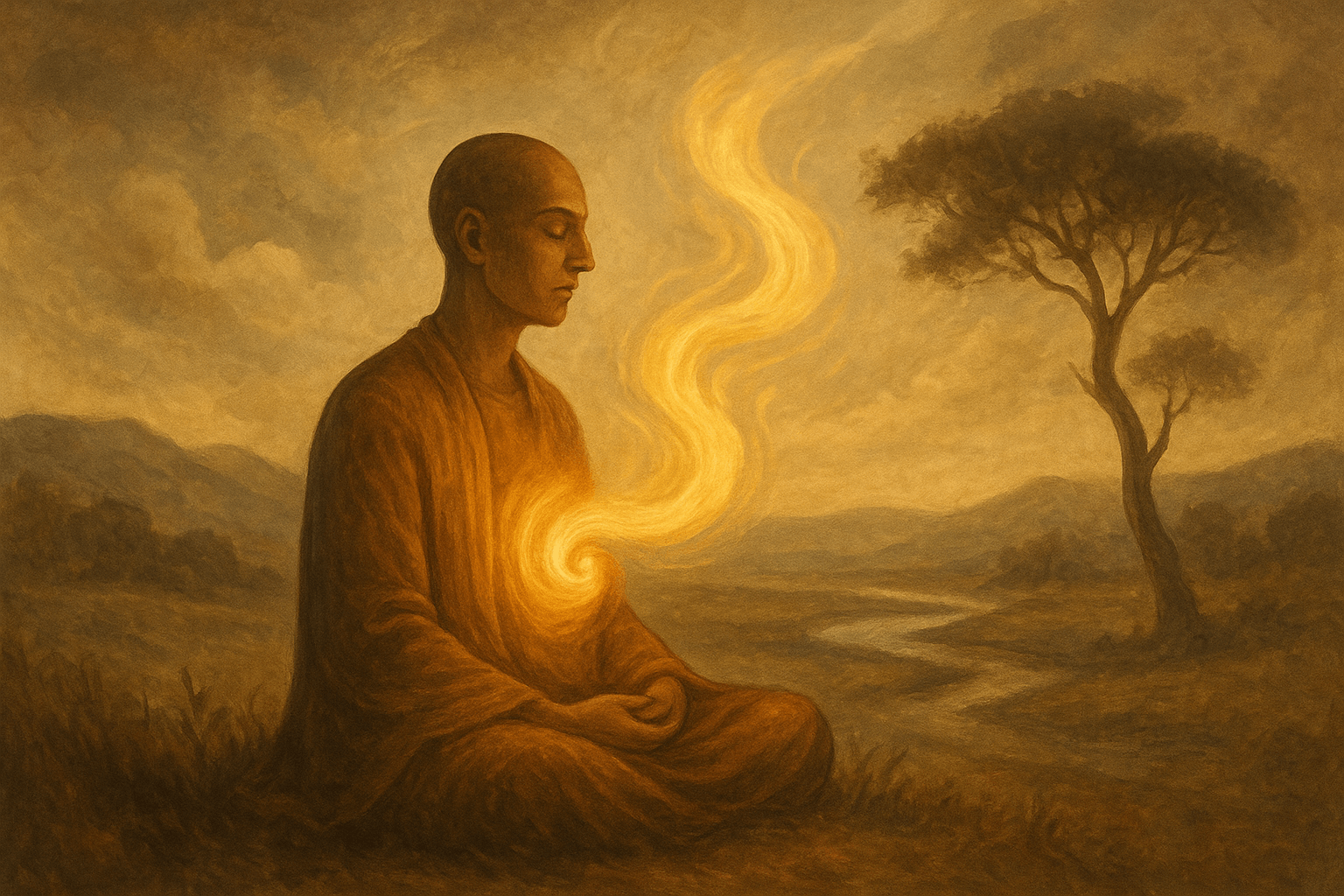
The silent moment before awakening
There comes a time in life when something inside us begins to whisper with such persistence that we can no longer ignore it. It is not a voice that demands, nor a call that shouts. It is more like a gentle current beneath the noise of everyday life, a subtle awareness that asks to be felt rather than understood. That moment, when consciousness wants to express itself through you, often arrives not as clarity, but as confusion, doubt, and even exhaustion.
I spent years trying to make the “right” decisions, fearing that a single mistake would undo everything I had built. I carried the burden of needing to be certain, of seeking control over the uncontrollable. And yet, what I later discovered was that those so-called mistakes were not failures at all, but gifts wrapped in the disguise of chaos. Each wrong turn was guiding me to meet myself more deeply.
The fear of being seen
One of my greatest fears has always been to show myself as I truly am—to speak, act, and exist without the layers that protected me from rejection. Those wounds, once carved by past experiences, still echoed in the present. The fear of not being enough, of being misunderstood, would often keep me silent.
But the truth is that every judgment I feared from others was, in essence, my own. The rejection I ran from was a mirror reflecting my inner war. Jung once said that “the most terrifying thing is to accept oneself completely.” And he was right. Because to embrace who we are requires courage to face both the light and the shadow, to meet the parts we have denied, and to love them anyway.
When the shadow becomes your teacher
According to Carl Jung, the shadow is not an enemy to be fought, but a teacher longing to be seen. It contains everything we have exiled in ourselves—anger, vulnerability, fear, but also creativity, spontaneity, and truth. When consciousness wants to express itself, it often does so through discomfort, through life situations that push us to see what we have tried to hide.
The Tao teaches something similar: that resistance to what is creates suffering, while harmony arises from acceptance. In the flow of Tao, everything has its place, even the mistakes, even the pain. What we call darkness is not absence of light, but a different frequency of it, waiting to be integrated.
To walk this path is to stop trying to fix ourselves and start listening. To recognize that healing does not come from becoming “better,” but from becoming whole.
The art of compassionate observation
At some point, I began to realize that the key was not to stop feeling, but to feel from a different place. To observe my own emotions without drowning in them. To see myself as both the ocean and the wave.
There is a strange peace that emerges when you stop identifying completely with the character you believe yourself to be—the one who struggles, fears, and judges. It’s not about detachment, but about remembrance. You start to sense that the one reading these words, the one breathing and existing behind the eyes, is something infinitely larger than the personality it inhabits.
Compassion begins there. Not as a concept, but as a presence. We spend so much of life chasing love and worthiness, not realizing that both have always been part of our essence. The Tao says: “He who knows others is wise; he who knows himself is enlightened.” To know oneself is to understand that we are both shadow and light, movement and stillness, doing and being.
Integrating the sacred in the ordinary
The awakening of consciousness does not happen in temples or during meditation alone. It reveals itself while washing dishes, talking to a friend, walking down the street. It unfolds in the most ordinary spaces, because life itself is the teacher. The way you respond when someone disagrees with you, the way you speak to yourself when you fail, the way you breathe when you are anxious—all of that is consciousness seeking to know itself through you.
The Tao reminds us that everything unfolds in perfect rhythm. There is no rush to arrive, because you already are what you seek. Life is not asking you to be someone else, but to remember what you’ve always been beneath all the layers.
The river and the soul
In the end, the moment you realize that consciousness wants to express itself through you is not a grand revelation—it is a quiet return. It is when you no longer resist what is happening, when you stop fighting the current and begin to float with it.
Jung would say that individuation—the process of becoming whole—occurs when the ego surrenders to the Self. The Tao would say that the river finds its path when it stops trying to be the mountain. Both point to the same truth: there is an intelligence beyond your understanding guiding every step.
And perhaps Rumi said it best:
“Do not be satisfied with stories, how things have gone with others. Unfold your own myth.”
For the soul does not want imitation—it wants experience. It wants to taste, to break, to burn, to bloom. Every doubt, every fall, every silence is part of that unfolding.
When you finally stop resisting who you are, consciousness does not need to express itself through you anymore. It simply is you—flowing, breathing, and remembering that you were never separate from it at all.