
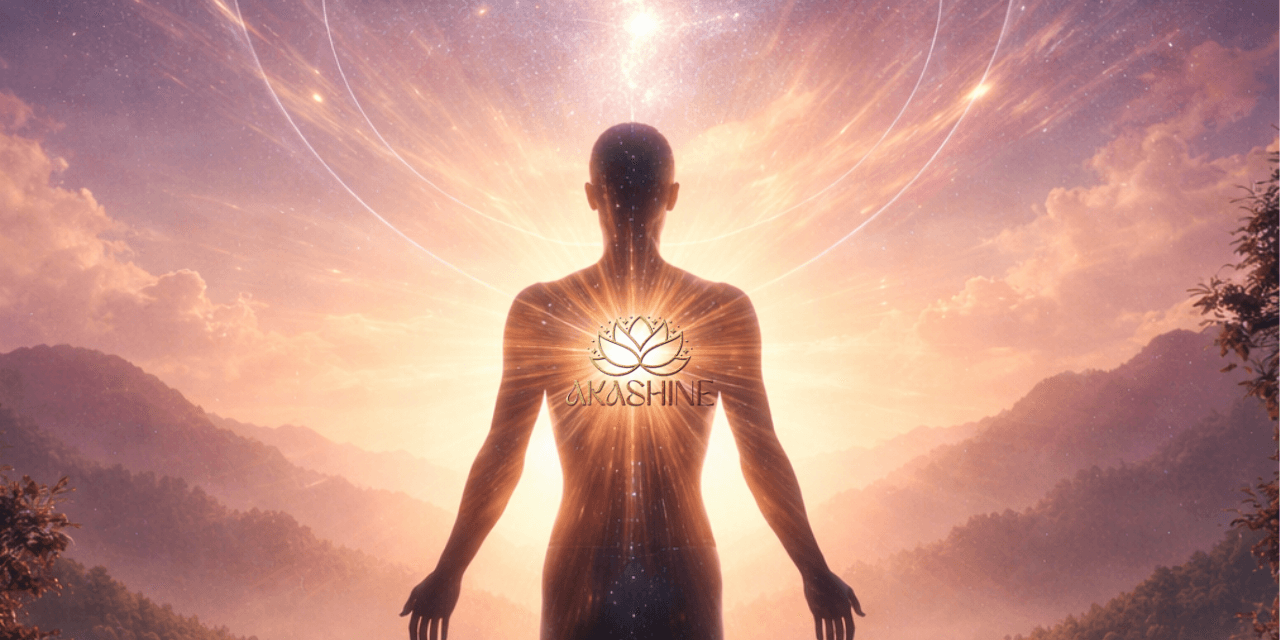
For a large part of modern history, the human being has tried to understand itself through a single layer of reality. The physical body became the main reference point, perhaps because it was the most evident, the most tangible, and the one that offered a sense of control. We could measure it, analyze it, intervene in it, and predict its functioning. This perspective brought undeniable progress, yet it also carried a silent consequence: we reduced the human experience to what could be precisely explained.
Even during the most rational periods of our history, there was always an underlying discomfort. Something never fully fit. Emotional pain, creativity, dreams, intuition, the need for meaning, or the experience of emptiness did not find a clear place within that framework. They were acknowledged, yes, but often treated as secondary phenomena, almost as side effects of a larger biological system. Over time, I came to understand that this discomfort was not a flaw, but a signal. An invitation to expand our perspective and recognize that the human being does not live within a single dimension, but expresses itself through many, often simultaneously and unconsciously.
The body, far from being an obstacle to inner growth, is our first home. Through it we feel, perceive, and relate to the world. Without the body there is no experience, and without experience there is no consciousness. For a long time, I myself lived disconnected from it. I functioned, responded, fulfilled expectations, but I did not inhabit it. It was the body that began to send signals when this disconnection became unsustainable. Constant fatigue, tension, anxiety, or the inability to remain in silence were not failures, they were messages. Today I understand that the body does not only register what we live, but also what we avoid. It stores memories, unexpressed emotions, and stories that have never passed through words. Listening to the body is an act of deep honesty, because the body does not negotiate with self-deception.
Mind, faith, and the need for meaning
To this first dimension, the mind adds another essential layer. It is the place where we construct the narrative of who we are and how we interpret the world. We do not live events as they are, but through the story we tell ourselves about them. That story can either open us or confine us. For years, I believed that thinking more would help me understand myself better. And in part it did, yet I also discovered that the mind, when it is not accompanied by awareness, tends to repeat. It repeats patterns, fears, inherited narratives. It moves constantly between past and future, rarely dwelling in the present.
Ancient traditions had already observed this. Not as a criticism of the mind, but as a warning. The mind is an extraordinary tool, but it was never designed to govern the entire human experience on its own. When it does, we lose depth. This is why many ancient cultures did not separate the physical, the mental, and the spiritual so clearly. Daily life was intertwined with ritual, not as superstition, but as a form of connection with the invisible. Nature was not a resource, but an extension of the self.
With the emergence of organized religions, spirituality began to take more concrete forms. God became described, represented, humanized. For some, this image became a bridge; for others, a barrier. I remember a recent conversation with a friend who told me that if God existed, it would have to be an individual, something physical, something recognizable, similar to us. She could not conceive it otherwise. I then asked her a simple question: whether that definition was decisive for her faith. Whether the fact that God was material or not truly changed her inner experience. She did not know how to respond. In that silence, I understood something important. We often argue about ideas, concepts, and images, while avoiding the experience beneath them.
For me, faith is no longer about affirming something specific, but about opening an inner space. It is not an intellectual certainty, it is a disposition. It does not eliminate doubt, it coexists with it. Doubt is not the enemy of faith; sometimes it is its doorway. To doubt is to be honest, to refuse inherited answers, to dare to not know.
Integrating instead of choosing
Over time, psychology and modern science began to build unexpected bridges. We started to recognize that we are not fully conscious of ourselves, that there are inner layers operating beyond the control of our will. Dreams, symbols, repetitions, impulses. All of this is part of our life, whether we like it or not. Ignoring this dimension does not make it disappear, it only makes it louder. Integrating it, however, allows us to live with greater coherence.
Paradoxically, contemporary science has been the one to return mystery to the center of the stage. Rather than offering absolute certainties, it reveals a dynamic, uncertain, and deeply interconnected universe. Matter is no longer solid and stable, but a process in constant transformation. This perspective does not contradict spirituality, it complements it. It reminds us that knowing does not always mean controlling. Sometimes knowing means accepting limits and learning to live with what cannot be fully explained.
I openly acknowledge that walking the path of uncertainty is uncomfortable. We live in a culture that rewards quick answers, clear identities, and firm truths. Asking who you are, why you are here, or what your potential might be requires stepping away from the safety of the familiar. Yet I have also learned that my comfort zone cannot offer me anything new. Everything I already know lives there. What transforms me exists just beyond it, in that space without guarantees. I call this challenging myself. Not as a struggle, but as an act of honesty.
Perhaps the true mistake was never the search for answers, but the belief that we had to choose a side. Science or spirituality. Reason or faith. Body or soul. Today, I feel that real maturity lies in integration. In allowing all these dimensions to coexist without canceling one another. I do not need to be right, nor do I need to convince anyone. It is enough for me to walk, observe, experience, and share. Because maybe understanding who I am and why I am here is not about reaching a final conclusion, but about daring to live the question with more presence, depth, and truth.