
The illusion of control and the shadow of fear
For most of my life, the greatest controller I have ever known has been fear, not the obvious fear of immediate danger, but the subtle fear of the unknown, the one that convinces us to remain within closed circles where the story seems already written and where unpredictability cannot reach us. I used to imagine life as a tale narrated by another voice, as if I were sitting in a theater, passive, listening. Then came the moment when the story made a pause, a comma, and suddenly the pen was placed in my hand. “Continue from here,” life whispered. That instant was terrifying, because it meant I was no longer a spectator but a co-creator. Niels Bohr, one of the fathers of quantum physics, once said, “Every valuable human being must be a radical and a rebel, for what he must aim at is to make things better than they are.” Fear resists this rebellion, fear insists that the unknown is unsafe, but it is precisely in embracing the unknown that we begin to awaken.
Pain as the threshold of awakening
The comma that interrupts the dream is almost always painful. We resist it, we curse it, yet pain becomes the threshold through which transformation enters. Neuroscience tells us that intense emotional experiences reconfigure the neural networks of the brain through neuroplasticity, literally creating new pathways for perception and behavior. What feels like a wound becomes, in truth, the seed of change. Fritjof Capra, physicist and systems thinker, reminded us that in both science and life, crisis often precedes transformation: “The more we study the major problems of our time, the more we come to realize that they cannot be understood in isolation. They are systemic problems, interconnected, and interdependent.” Pain, in this sense, is the systemic signal of the soul that says: something must change.
Buddha himself taught that “pain is certain, suffering is optional.” Pain is the comma, the unavoidable instant that halts the story, but suffering is the illusion that we are alone in it. When I looked deeply, I saw that even in my darkest pain, I was sustained by something greater, a love so vast it could only be described as my own essence remembering itself.
The pen in your hands: co-creation and the inner love that sustains
When I first realized that the pen of my life was now in my hands, I trembled. Freedom can be terrifying, because it means we can no longer blame the storyteller outside of us. Yet slowly I discovered that co-creation was not an isolated task. It was a dialogue with the infinite, a conversation with the essence of life itself. Gandhi once wrote, “The best way to find yourself is to lose yourself in the service of others.” For me, co-creation became exactly that: dedicating my efforts not to the illusion of perfection or control, but to the truth that lived in my heart and longed to be shared. Every word I now write, every gesture of sincerity, is not merely mine, but a reflection of the love that sustains us all.
The fragrance of truth: beyond concepts and explanations
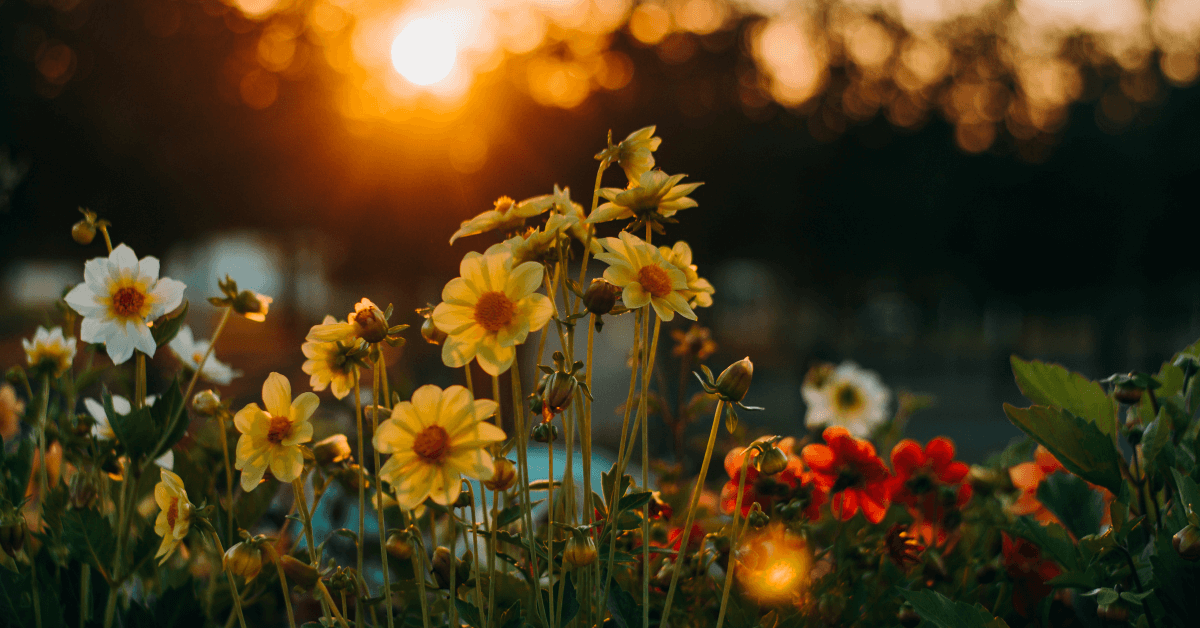
I can describe the scent of a flower to you, I can give you the chemical composition of its fragrance, speak of molecules like linalool or geraniol, and still no description, no matter how precise, can replace the living moment of breathing in its perfume. Neuroscientists have shown that the olfactory bulb is directly connected to the limbic system, which governs emotion and memory. That is why a single aroma can suddenly open the gates to forgotten worlds within us. But here lies the mystery: science can explain the mechanism, yet it cannot capture the sacred feeling that arises when the fragrance touches your soul.
Buddha once compared awakening to the experience of tasting honey: no explanation suffices; one must taste it for oneself. The fragrance of truth is like that. Words reduce, explanations fragment, but experience unites. There is, as I often say, more truth in the fragrance of a flower than in a thousand definitions.
Returning home to what has always been
In those silent moments when I dared to inhale the fragrance of life itself, I recognized something familiar, a memory of home. It was not a place outside of me but a reality within, timeless and unshakable. Fritjof Capra, reflecting on Eastern wisdom and modern physics, explained: “Science does not need mysticism and mysticism does not need science, but man needs both.” This homecoming is precisely the union of both dimensions: the scientific and the mystical, the measurable and the ineffable.
When we come home to ourselves, we understand that fear has always been an illusion, a shadow projected by the mind onto the unknown. Niels Bohr often spoke about the principle of complementarity, about how two seemingly opposite descriptions can both be true, just as light is both particle and wave. In the same way, life is both known and unknown, safe and uncertain, painful and beautiful. The dance of opposites is not something to fear, but something to embrace, for within it lies the wholeness we seek.
A final invitation: smell the flower for yourself
No one can give you this truth secondhand. I can share my story, I can speak of the pen, of fear, of pain and awakening, but in the end, the fragrance must be yours. The flower waits for you, the unknown waits for you, and the pen has always been in your hands.
My invitation is simple and yet infinite: dare to smell the flower for yourself, dare to write your own sentence after the comma, dare to step into the unknown not as a prisoner of fear but as a co-creator guided by love. For home has never been far, it has always been here, waiting in the fragrance of life, eternal and unchanging.