
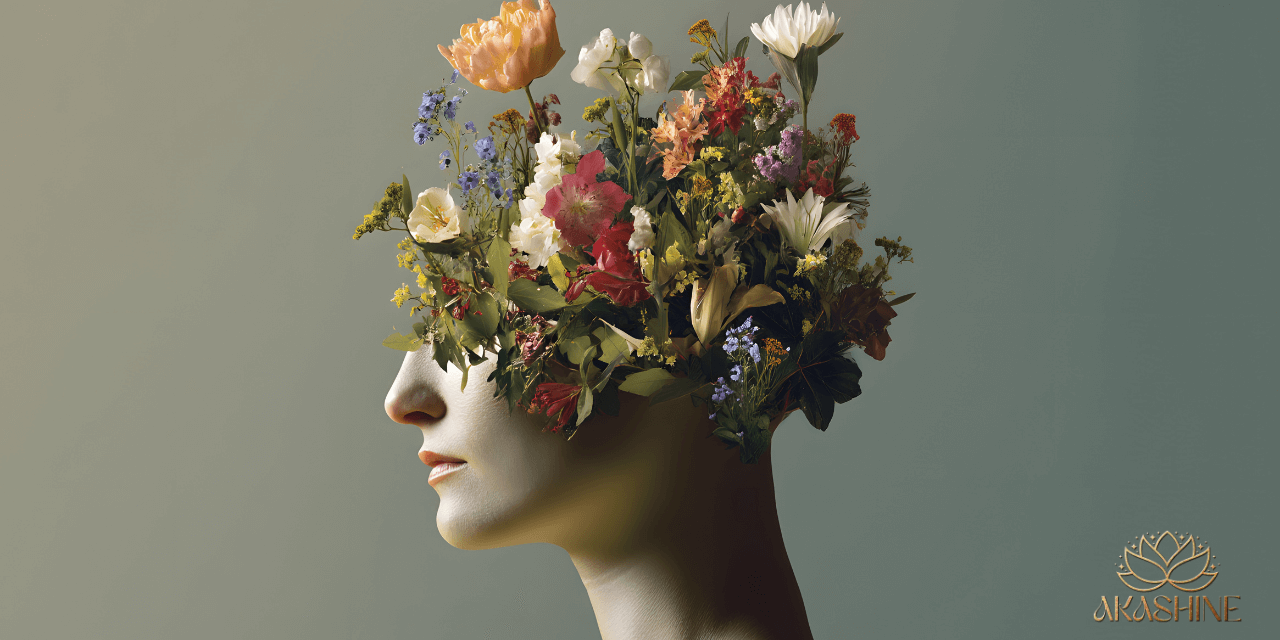
A nervous system not designed for this much noise
Never before in human history have we been exposed to such an overwhelming level of abundance, not only in material terms, but in stimuli, information, choices, expectations, and constant signals competing for our attention. Our species did not evolve in this environment. The human nervous system was shaped across hundreds of thousands of years in conditions of scarcity, silence, danger, and long periods of waiting. Food was not guaranteed, social bonds were small and intimate, and moments of calm were not interrupted every few seconds by notifications, artificial lights, or endless streams of content.
From a neuroscientific perspective, this matters deeply. The brain is an organ of adaptation, not of excess. Dopaminergic circuits that once helped us survive by motivating us to seek food, connection, and novelty are now constantly overstimulated. The result is a chronic state of alert, restlessness, and internal noise that many of us mistake for who we are, when in reality it is a nervous system struggling to regulate itself in an environment it was never designed for. I say this from personal experience. Living in modern life can quietly push us out of balance, and the adaptation to so much stimulation often comes at the cost of inner peace.
Neuroplasticity and the hope of returning to balance
For a long time, I truly believed that the damage I had done to my body and mind could not be reversed. I thought that once certain thresholds were crossed, there was no way back. Neuroscience tells a very different story. Thanks to decades of research on neuroplasticity, we now know that the brain is not a fixed structure, but a living, changing system capable of reorganizing itself throughout life. Neural pathways strengthen or weaken depending on how we live, what we repeat, what we avoid, and what we allow ourselves to feel.
This understanding changed everything for me. The idea that the brain can slowly return to more regulated states, that overstimulated circuits can calm down, and that sensitivity can be restored, is profoundly hopeful. Something as simple as enjoying a sunset once felt impossible to me. I was genuinely incapable of being still, incapable of silence, incapable of tranquility. My nervous system did not know how to rest. And yet, just like a muscle that has been neglected, the capacity for calm can be trained. Little by little. Minute by minute. Sometimes even tracking how long you can stay present without reaching for distraction becomes an act of healing. Biology supports this process. When we reduce noise, regulate breathing, and allow stillness, the parasympathetic nervous system begins to reassert itself, reminding the body that it is safe to soften.
Human biology, evolution, and the forgotten language of cycles
Modern life often demands linear productivity, constant growth, and perpetual forward motion, but human biology does not work that way. We are rhythmic beings. Our hormones, immune system, sleep patterns, and emotional states are deeply influenced by cycles, both internal and external. From circadian rhythms governed by light and darkness, to seasonal shifts that historically dictated when we gathered, rested, migrated, or reflected, our species has always lived in dialogue with nature.
This is why the idea of forcing radical change at arbitrary calendar dates often feels violent to the nervous system. I was joking with a friend recently who told me that this year his New Year’s resolution was simply to improvise. I told him that the Gregorian calendar does not work very well for me either. Winter, for me, is a time of introspection, slowness, and internal listening. It feels unnatural to demand explosive momentum during a season that biologically invites rest and inwardness. I prefer to begin slowly, without grand resolutions, sensing how I feel, allowing myself to simply be, and letting intentions emerge organically, often aligned with spring, when energy naturally rises again.
From an evolutionary standpoint, this makes sense. For most of human history, winter was a period of conservation, not expansion. Honoring these cycles is not laziness; it is intelligence rooted in biology.
Trusting the human potential
Despite everything, I love the world. Truly. I love it with all its chaos, contradictions, and challenges. I believe we have been given an extraordinary privilege: to experience this human life, with all its depth and complexity. Even now, in an age that often overwhelms us, I remain deeply optimistic about what we are capable of becoming. The human potential continues to surprise me, especially when we remember that adaptation does not always mean doing more, but sometimes doing less, more slowly, and with greater awareness.
When neuroscience, biology, and lived experience converge, they tell the same story: healing is possible, regulation is possible, and balance is not a fantasy. It is a process. One that asks us to listen, to respect our evolutionary roots, and to remember that beneath all the noise, there is a nervous system that still knows how to come home to itself.