
Sometimes a simple conversation opens a door that has been quietly waiting to be seen. Yesterday, while talking with a friend, he asked me a question that seems simple on the surface, but vast once you allow it to breathe: what do you think about life, in general. I found myself answering without trying to be clever or philosophical, simply honest, speaking from a place that sought meaning rather than certainty. I told him that I believe every single human being on this planet carries a story that deserves to be seen, not hidden, not covered, not silenced, because what we refuse to see does not disappear, it quietly continues to shape us from within.
Looking at the Ingredients
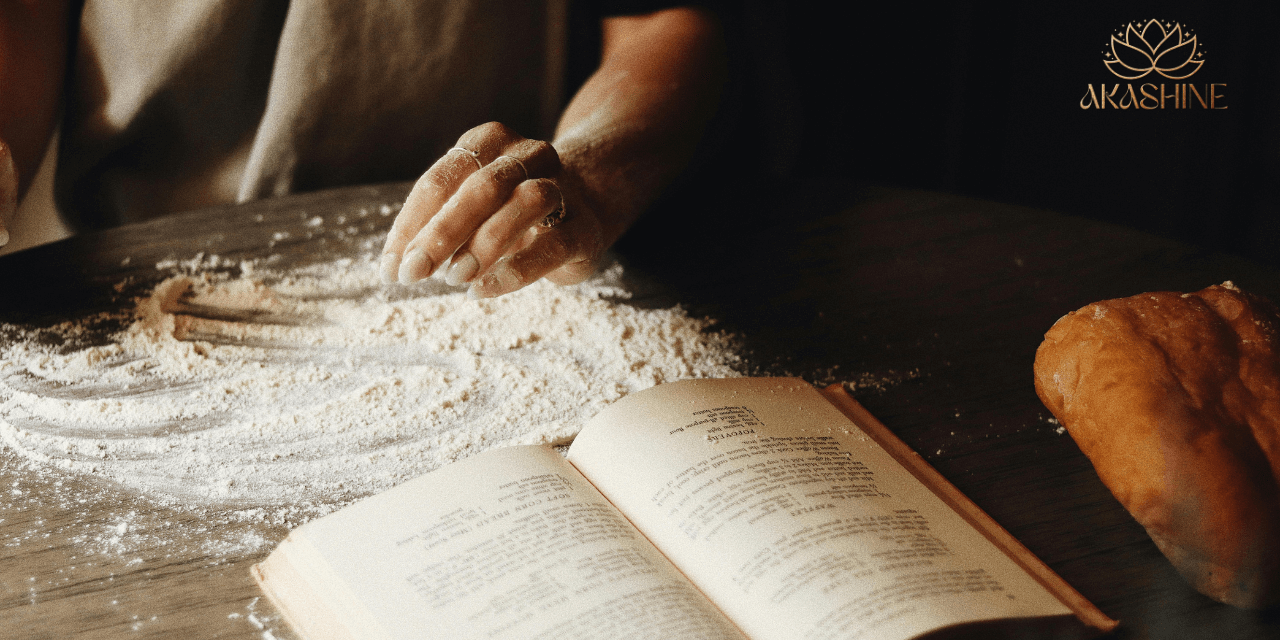
I explained it with an image that felt natural to me. We are like a cake. What we see on the outside is the final result, but that result only exists because of the ingredients that were used long before we were conscious of them. Experiences, childhood imprints, wounds, silences, joys, fears, beliefs absorbed unconsciously, all mixed over time. Understanding who we are today requires the courage to look at these ingredients without judgment, without the need to blame or justify, but with the intention of understanding. Carl Jung spoke of the shadow as those parts of ourselves we exile from consciousness, not because they are wrong, but because at some point they were inconvenient or painful. When ignored, they do not vanish, they operate silently, influencing our choices, our relationships, and even how we perceive reality. Looking at the ingredients of the cake is an act of psychological honesty, a willingness to reclaim what was once set aside.
Consciousness
At some point in the conversation, Nikola Tesla’s words came to mind, when he suggested that if we want to understand the universe, we should think in terms of energy, frequency, and vibration. Tesla had an intuitive understanding that reality extends beyond what is immediately measurable. We often assume that answers will only be found in laboratories, test tubes, or controlled rooms full of instruments. And I am not saying that this path is wrong; science has offered us extraordinary insights into matter and time. But consciousness seems to ask for something more subtle. Jung understood this deeply when he explored the symbolic language of the psyche, dreams, archetypes, and synchronicities, pointing toward an inner order that exists even when we cannot rationally explain it. Studying consciousness may not be only about observing outwardly, but about turning attention inward, observing the observer itself, and daring to take inner experience seriously.
Humanity
All human beings share something deeply intimate, regardless of culture, language, or personal history. We all carry wounds, unspoken griefs, silent fears, and emotional scars that were formed long before we had the words to name them. We learned to hide these parts of ourselves because, at some point, hiding felt safer than feeling. Jung reminded us that what we do not make conscious appears in our lives as fate. Perhaps the time has come to give these hidden parts a place, not to glorify suffering, but to acknowledge it with compassionate awareness. Self-compassion is not weakness or indulgence, it is clarity. When we begin to understand ourselves with kindness, layers of meaning unfold, revealing internal connections we never imagined.
Answers
Einstein suggested that even if we do not fully understand the laws of the universe, everything follows a cause, an underlying order that exists regardless of our comprehension. Perhaps the emptiness we sometimes feel is not the result of insufficient progress, but of disconnection from that inner order. I do not pretend to answer these questions. I can only share my perception, which is subjective and shaped by my own experiences. Each of us perceives reality through a unique lens, and that diversity of perception is not a flaw, but a reflection of the complexity of consciousness.
A Compass in the heart
I joked with my friend during our conversation, telling him that I began this journey of self-knowledge, healing, and listening to my body and sensations because someone placed me here without an instruction manual. We laughed, but later the image stayed with me. No instruction manual, yes, but perhaps we were given something else. A compass in the heart. Something subtle, intuitive, and quiet, that points inward when we are willing to listen. I wanted to share this reflection with you because, in a very real way, I feel that you are part of me. We share the same planet, a common evolution, and those indescribable emotions that move us beyond logic. This is not a conclusion; it is an invitation to gently look at your own ingredients, to honor your inner history, and to trust that inner compass that has been there all along, patiently waiting to be acknowledged.