
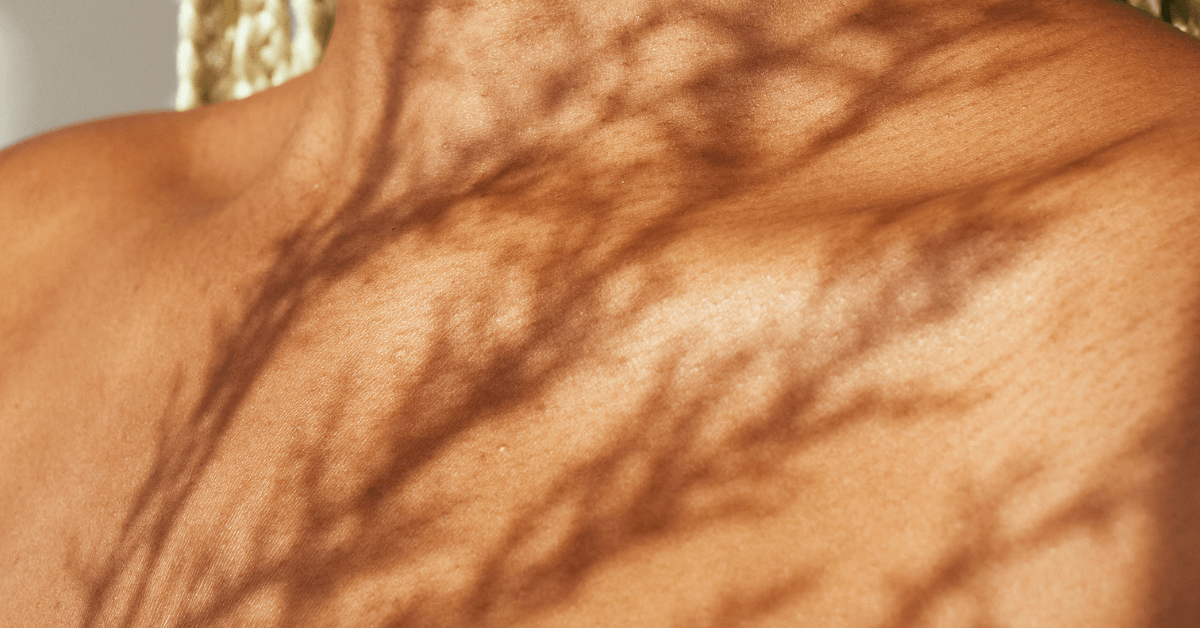
Listening to the body’s voice
For a long time, I lived inside my body as if it were a simple vehicle, something that carried me from one goal to another without asking how it felt or what it needed. I demanded from it endurance, clarity, and strength, while I, in return, gave it very little attention. I believed my consciousness existed somewhere above, detached from the pulse of my own cells. But life, in its quiet and mysterious ways, began to whisper through the language of the body—through fatigue, through tension, through sensations that seemed to carry forgotten stories. I realized that this body I had treated as a machine was in truth a sacred ally, a guardian of wisdom that patiently waited for me to listen.
Now I approach it with reverence. I have made peace with it, becoming its friend, understanding that every discomfort holds a message and every contraction hides an emotion that once could not be expressed. The paradox is profound: I have never been more certain that I am not merely this body, and yet, I have never listened to it more closely. In the silence of awareness, I can feel its language—the subtle tremor beneath the ribs, the way it softens when I breathe with love, the way it reveals where I still hold the past. My relationship with my body has become a form of prayer, a dialogue where I no longer seek to dominate, but to understand.
Carl Jung once wrote that “the body is the shadow of the soul,” a reminder that the physical form mirrors the depths of our inner world. What we repress in the psyche finds expression in the body—what we avoid in consciousness emerges as sensation, pain, or disconnection. Healing, then, is not only a mental act but an act of embodiment, of welcoming into form that which the spirit had long exiled. When I tend to my body, I am not only caring for flesh and bone; I am creating space for my own light to move freely again.
The hidden wisdom within our cells
Every cell of the body is a keeper of stories. It carries the vibrations of our joy and our sorrow, of the words we spoke and those we silenced. Science now explores what the mystics knew intuitively—that trauma, emotion, and memory leave physical imprints within us. What we call “the unconscious” does not only dwell in the mind; it lives also in the muscles, in the fascia, in the rhythm of our heartbeat. The body remembers what the intellect cannot hold, and through awareness, movement, and presence, it invites us to rewrite those memories with gentleness.
When we begin to listen to the body instead of overriding it, something miraculous occurs. The boundaries between the spiritual and the physical dissolve, and the very act of breathing becomes a sacred ritual. We realize that the divine was never outside of us—it has always lived within this fragile yet miraculous vessel that allows us to feel, to love, to transform. Jung called this journey individuation: the process through which we integrate shadow and light, body and spirit, instinct and awareness, until we remember that all of it belongs.
Rumi captured this truth in a language made of love and fire:
“You are not a drop in the ocean. You are the entire ocean in a drop.”
When I read those words, I feel they are written upon the skin itself. The body is the drop that carries the ocean of existence; it is how life touches itself, how consciousness experiences form. To love the body is not vanity—it is a sacred act of remembrance.
The glitter of life
Yesterday, I went out to the field to read. I carried my chair and my coffee, searching for a moment of stillness. But as I sat there, I became entranced by a tree—a silver poplar whose leaves shimmered under the sunlight like waves of glitter. The lake in front of me mirrored the movement of the wind, and the whole landscape seemed to breathe with light. For a long time, I just watched. The coffee turned cold, the book remained closed, and yet I was more present than I had been in days. I felt like a child again, rediscovering the same magic I once sought in glitter and starlight.
When I was little, I loved glitter with an innocent obsession. My parents once bought me a pair of light blue shoes, and I remember covering them entirely with glue and glitter because I wanted them to sparkle like the ones I couldn’t have. I didn’t have the happiest childhood, but even then, I believed in something magical—something that existed beyond what was visible. That day, under the silver tree, I met that little girl again. She had been waiting for me, patient and luminous, reminding me that wonder was never lost, only forgotten under layers of duty and noise. The world was showing me that the purpurina I once loved still danced around me, now in the leaves, in the light, in the movement of the air.
In that moment, I understood that the body is also made of that same magic—the same shimmer that lives in the tree, in the water, in the cosmos. It feels, it vibrates, it mirrors life’s rhythm. When we reconnect with its innocence, when we allow ourselves to see and feel again, the sacred returns to the simplest places.
Returning home to the body
The more I awaken to what I am beyond form, the more I honor the form that allows me to be here. The body is not the opposite of spirit—it is its expression, its extension, its language. Within its fragile architecture, the divine finds movement, experience, and meaning. When I rest, when I nourish myself, when I listen to my heartbeat with gratitude, I am not performing a mundane act—I am acknowledging the miracle of being alive.
Perhaps this is what Jung called the union of opposites: the realization that heaven and earth, soul and matter, light and shadow, are not in conflict but in sacred cooperation. The spirit descends into the body to learn intimacy with life, and the body ascends toward spirit through awareness, love, and surrender. In this dance, something eternal begins to remember itself.
Rumi wrote,
“There is a voice that doesn’t use words. Listen.”
That voice, I have learned, speaks through the body. It speaks in the stillness after tears, in the way the heart opens when we breathe deeply, in the shiver of awe when sunlight meets water. To listen to that voice is to come home—not to a place, but to ourselves.
Maybe that is the essence of the path: not to escape the body, but to inhabit it completely. To recognize that the divine is not found by transcending matter but by loving it, by allowing it to reveal its hidden light. The sacred, after all, was never elsewhere. It has always been shimmering within us—like glitter, like breath, like life itself.