
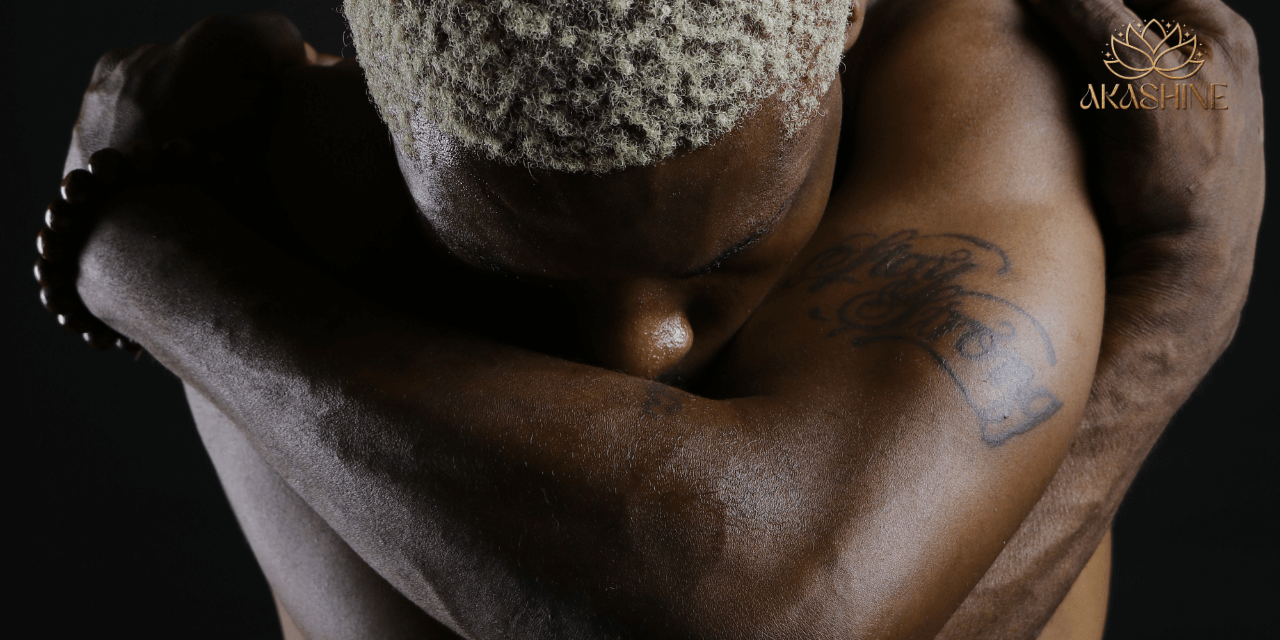
Not every day I feel an extreme motivation, and I no longer see that as something that needs to be corrected. There was a time when I believed that inner drive had to be constant, that moving forward meant never slowing down, and that rest was only allowed once everything was done. Today I understand that this belief was never truly mine. It was learned, absorbed quietly, inherited from a world that measures worth through productivity rather than presence. Self-compassion became the most important lesson of my life precisely because it did not come naturally to me.
The relationship we have with ourselves is the silent architecture of our entire life. For many years, I lived without truly knowing myself, functioning on autopilot, meeting expectations, surviving rather than inhabiting my own experience. The way I spoke to myself was harsh, demanding, and deeply conditioned by early experiences where compassion was not freely given. I learned, without words, that softness was unsafe and that being hard on myself was a form of protection. Love, as I understood it then, had conditions.
I return to the past only to bring it into the present. Not to stay there, not to justify pain, but to meet it with a different quality of awareness. With adult tools and presence, I can now hold those earlier versions of myself without judgment. Rewriting the story does not mean denying what happened. It means changing the inner tone with which it continues to live inside me.
Perfectionism, fear, and the courage to look inward
Perfectionism guided much of my life. Everything had to be done flawlessly, with precision and control, and when that ideal inevitably collapsed, the punishment came from within. I did not know how to fail gently. Mistakes felt like proof that something was fundamentally wrong with me. What I later understood is that this perfectionism was never about excellence. It was about fear. Fear of being seen, fear of not being enough, fear of losing connection.
When I finally began to know myself, truly know myself, I discovered how much of my inner world had been operating in the shadows. Jung warned that self-knowledge is not a path of comfort. It is an encounter with the parts of ourselves we have carefully avoided. It is not light without darkness, but an honest meeting with both.
I found layers of fear beneath my thoughts, beneath my habits, beneath my choices. Fear had become so familiar that I no longer recognized it as fear. It was simply the background of my life. Knowing myself did not remove it, but it gave me something far more grounding: understanding. With understanding came the ability to regulate, to pause, to breathe, to respond rather than be pulled unconsciously. Fear still exists, but it no longer defines the entire landscape.
Rumi wrote, “Why are you so busy with this or that or good or bad, pay attention to how things blend.”
In that blending, I learned that strength does not cancel vulnerability, and awareness does not require perfection.
Stillness, presence, and coming home to the heart
Meditation and healing entered my life quietly. Not as solutions, not as goals, but as spaces where I could finally rest. Through stillness, I began to access the deeper layer of being that exists beneath identity, roles, and inner narratives. A place where nothing is demanded of me. A place I return to whenever I can, like resting in unseen arms, allowing myself to soften, even briefly.
At first, giving myself time felt unfamiliar, almost uncomfortable. I felt an internal urgency to remain occupied, as if stillness were something I had not earned. That was when I realized how little presence I had offered myself over the years. I had been moving through life with someone I barely knew, because I had rarely sat with myself in real attention.
As my relationship with myself softened, my relationship with others changed as well. The first person to listen to, to care for, to understand, is yourself. This is not motivational language. It is structural truth. You are the axis upon which your life rests, and when that axis is neglected, everything else compensates at a cost.
Rumi said, “Where there is ruin, there is hope for a treasure.”
In the quiet places I once avoided, I found that the treasure was never outside of me. It had always been waiting beneath the noise, beneath the fear, beneath the belief that I had to earn my right to rest.
I do what I do because my heart moves me in that direction. I do not want to limit my words, because they are not meant to convince, only to be true. Self-compassion did not make me weaker. It made me honest. It did not remove fear from my life, but it gave me a place to hold it without judgment.
And perhaps that is the deepest form of healing:
To offer ourselves the kindness we were once denied, and in doing so, to finally come home.
As Rumi reminds us, “Yesterday I was clever, so I wanted to change the world. Today I am wise, so I am changing myself.”