
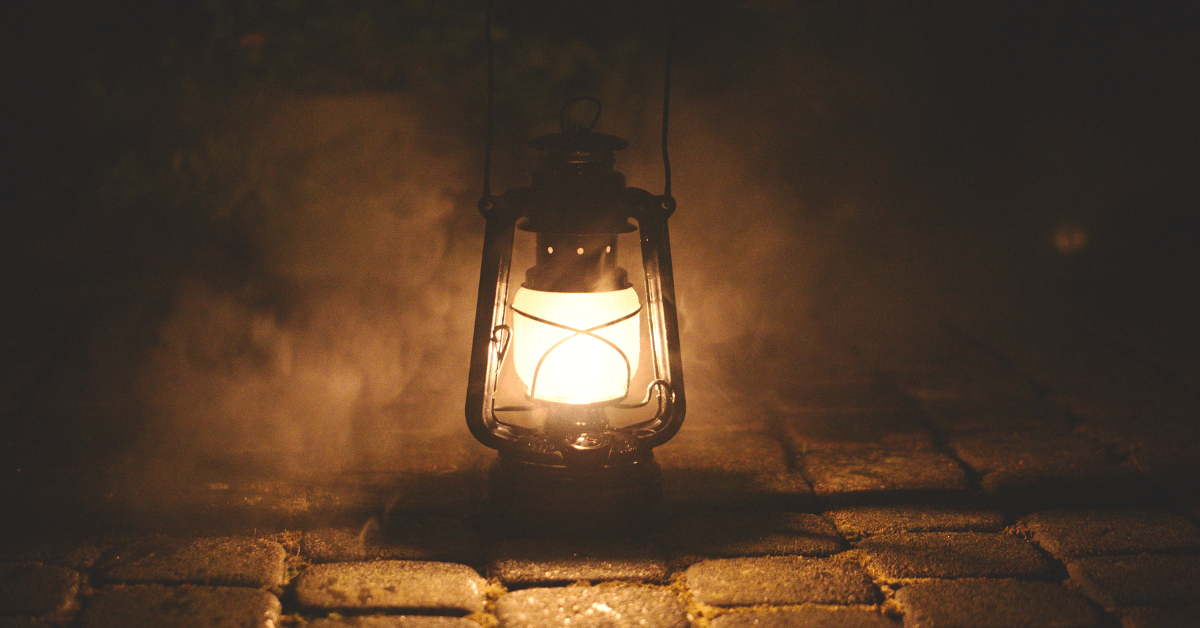
The invisible threshold of chosen suffering
True faith is not proven in temples or carved into stone tablets, but revealed in the hidden decision to walk into suffering when it arises, not as punishment, but as a path chosen for the sake of love and truth. This trial by fire is not about blind endurance, but about trust: remaining when the horizon vanishes, moving forward even when the next step cannot be seen, holding a fragile lamp in hand while the path stretches into darkness. Bohr once said that “every valuable human being must be a radical and a rebel,” and in that spirit, faith itself is a rebellion against despair. It is the daring act of leaning into the unknown, convinced that truth will meet us there. Rumi captured this paradox in his timeless words: “The wound is the place where the Light enters you.” What feels like a breaking is in fact an opening, and what we thought was loss becomes the beginning of a deeper encounter with ourselves. Truth cannot be touched or defined; it can only be lived, and when lived, it reshapes the very ground of our being.
The temptation to postpone and the courage to stay
There was a moment in my own life when fear persuaded me to wait, to delay, to protect myself with the illusion of tomorrow. I told myself that the right time would come, that clarity would arrive later, but in reality it was avoidance disguised as wisdom. Jung wrote: “Until you make the unconscious conscious, it will direct your life and you will call it fate.” In my postponement, I was simply obeying the hidden patterns of fear. The truth is that postponement is one of the most deceptive forms of resistance, because it feels safe, it feels reasonable, but it quietly robs us of life. Every delay is a denial of the present moment’s gift. Only when I stopped running, when I laid down the excuses and allowed myself to face what was in front of me, did transformation begin to stir. It was not comfortable; it felt like burning. Yet that burning was purification, not destruction. Fritjof Capra has pointed out that physics itself teaches us about this rhythm: particles emerge from emptiness, collapse into new forms, and the very act of breaking is what allows life to reorganize at a higher order. So too with us — what we think of as endings are often beginnings written in a different language.
The paradox of wisdom: emptiness and fullness
Across traditions, the same truth is echoed in countless voices. The Taoist sage speaks of the usefulness of the empty space within the cup, the Zen master points to the silence between words, and the Sufi poet shows that what we let go of makes us free. Buddhism reminds us that the self we cling to is a collection of illusions, and liberation comes when we release our grip on them. Psychology, too, testifies that the collapse of the old self can be the doorway to authentic wholeness. And physics, through the insights of Bohr and later thinkers like Capra, reveals that what seems to be solid is only a dance of relationships, an emptiness full of energy, a silence vibrating with possibility. Emptiness is never absence; it is the womb of new creation. To face emptiness is to stand at the threshold of fullness. To surrender what we think we are is to encounter what we have always been.
The shock of not recognizing oneself
Just a few days ago, I found myself looking at old photographs of my past. And for the first time in my life, I felt a complete estrangement. I did not recognize that person — not the eyes, not the gestures, not even the presence behind the gaze. It was as if I were staring at a stranger who once bore my name. The shock of that realization pierced deeply, not because of nostalgia, but because I suddenly understood that the self I once identified with no longer exists. That version of me had dissolved, quietly, without announcement. The image was gone, the role was gone, the mask had fallen. And though a part of me trembled with grief, another part of me felt an immense liberation. It was as though life itself whispered: “You are not bound to return there; that chapter is complete.” Jung would say this is what individuation feels like — the old personality collapses, not as a tragedy, but as an opening into a wider horizon of the soul. The physics of the self mirrors the physics of nature: what dissolves is not lost, it is transformed into the unseen currents that nourish what is to come.
The night before dawn
We all pass through what mystics have called the dark night of the soul, moments in which everything seems lost — even our sense of who we are. But these nights are not punishments; they are passages. The seed must crack open in darkness before the tree within it can rise toward the light. Rumi wrote: “Don’t get lost in your pain, know that one day your pain will become your cure.” The lesson is universal: what appears to be destruction is the preparation for renewal. Faith is not naive optimism; it is the inner knowing that even when we cannot see the horizon, the sun is preparing to rise. The lamp in the hand may flicker, the path may seem endless, but dawn is inevitable. Fritjof Capra reminds us that every collapse in nature opens the possibility of higher order — chaos births new symmetry. And if the universe itself trusts this rhythm, so too can we. When everything falls apart, it is often because everything is about to fall into place.