
The quiet symphony of a rainy morning
This morning, while I was holding my cup of coffee, the rain was falling steadily outside. The sound of the drops against the glass created a rhythm both familiar and mysterious, a background that seemed to whisper truths beyond words. I have been increasingly drawn to these gray and rainy days, perhaps because they remind me of cycles—the coming and going of seasons, the movements of the cosmos, and even the subtle fluctuations within my own body. Physics reminds us that stillness is only an illusion, because “nothing is at rest, everything is in motion,” as Heraclitus already intuited and as modern science confirms through the perpetual vibration of atoms.
At that moment, I was not simply drinking coffee. I was listening to the rain, watching its patterns, feeling its rhythm resonate within me. The quietness of the room seemed to merge with the universe itself, where motion, impermanence, and transformation are not anomalies but laws.
A painting that returns my gaze
As the rain continued to fall, my eyes stopped at a small painting I created just a few months ago while playing with my children. It was not born from artistic ambition, but from spontaneity and laughter, from the joy of turning a moment into something tangible. On the canvas, an abstract tree and two stairs appear clumsily drawn, and yet, over time, it has become deeply meaningful to me.
As I stared at it, I had the strange feeling that the painting was staring back at me. The moment froze—rain outside, coffee in my hand, the imperfect painting on the wall—and suddenly the present seemed to fold in on itself. Albert Einstein once wrote: “The distinction between past, present and future is only a stubbornly persistent illusion.” Physics, especially with the advances of relativity and quantum mechanics, suggests that time is not linear as we perceive it, but rather a complex fabric where moments coexist in ways that our minds struggle to grasp. In that instant, my gaze and the painting seemed to meet across the boundaries of time, as if it were not me looking at the past but the past observing me.
The science and the mystery of time
Recent physics has begun to approach what mystics from the East have said for millennia. Quantum theory reveals that the act of observation affects the system itself, blurring the line between subject and object, observer and observed. Werner Heisenberg affirmed: “What we observe is not nature itself, but nature exposed to our method of questioning.”
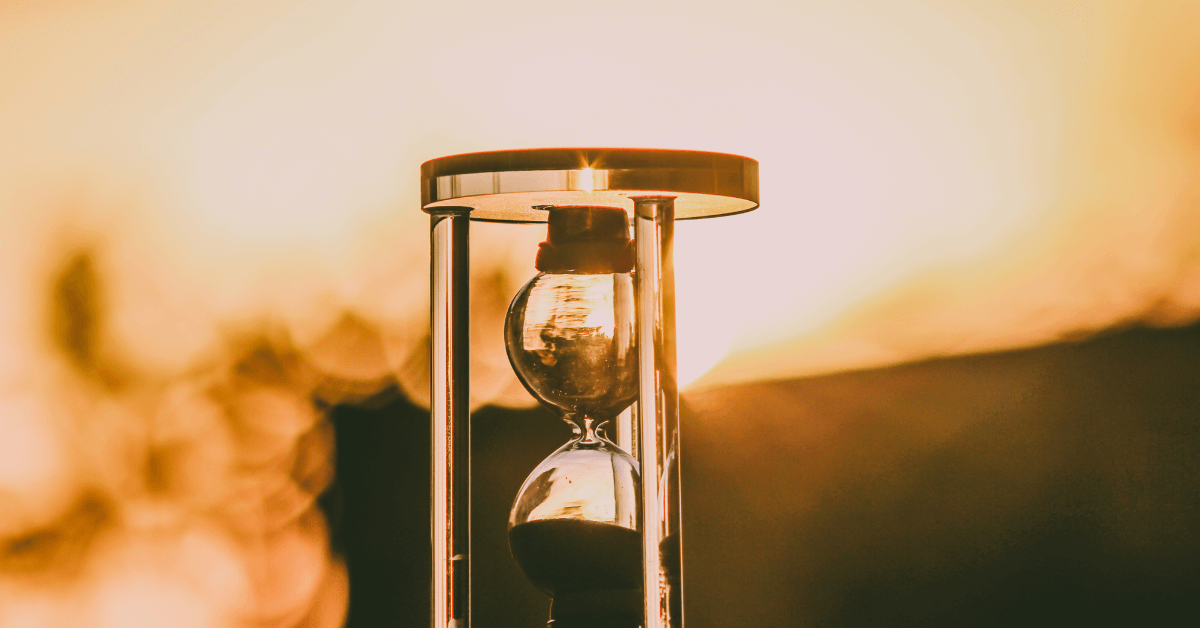
The flow of time also becomes less rigid the deeper we explore. Relativity shows that time dilates depending on gravity and velocity; quantum mechanics questions whether the flow of time is even fundamental. Contemporary researchers like Carlo Rovelli argue that “time is an emergent phenomenon, born from the entanglement of events rather than a universal background clock.” Eastern traditions, from Buddhism to Advaita Vedānta, echo this perspective, reminding us that the present moment is the only reality. What I experienced with the rain and the painting was precisely that—the collapse of linearity into presence.
The psychology of decision and fear
As I reflected on this, another realization surfaced: every moment is a decision point. Psychologists like Daniel Kahneman have shown that much of our decision-making is automatic, guided by what he calls System 1, a fast, unconscious process. Many of these choices are rooted in fear, shaped by early experiences and conditioned responses. In my own case, I realized that fear had been the hidden architect of countless decisions in my life.
Carl Jung reminds us: “Until you make the unconscious conscious, it will direct your life and you will call it fate.” Recognizing that pattern—seeing how fear shaped my choices—was painful, yet liberating. Because each present moment, like each drop of rain, gives me a new chance to choose differently.
Choosing between love and fear
Ultimately, every decision seems to reduce itself to a simple polarity: love or fear. This idea is not just poetic but deeply psychological. Fear contracts, love expands. Fear repeats the past, love opens the possibility of the new. Neuroscience has even shown that when we act from fear, the amygdala dominates, limiting our perspective, while when we act from trust or compassion, prefrontal areas activate, allowing creativity and openness.
I began experimenting with making “counterintuitive” decisions—acting not from panic but from trust. Small choices, sustainable over time, that became the seeds of transformation. As William James, the father of modern psychology, said: “The greatest weapon against stress is our ability to choose one thought over another.” The rain outside became a mirror of this truth: drops may be small, but together they shape landscapes.
Rewriting the story through presence
Trust has been one of my deepest wounds, a pattern born from a childhood where trust was scarce. Life, of course, kept presenting me with situations that required trust again and again, as if the universe itself insisted I return to that lesson. Sometimes I failed the test, choosing fear again, but the present always offers another opportunity. That is the beauty of awareness: we can always rewrite the story, drop by drop, decision by decision.
In the end, I realized that this morning was not simply about rain or coffee. It was about time, about presence, about the possibility of living differently. If you are reading these words, it is not by chance. The same life that makes atoms vibrate, that bends time in the cosmos, that teaches us through psychology and experience, is the one that brings us together here. We are witnesses and co-creators of a story that is written with each choice we make.