
What is happening before we see anything
It seemed like it was not arriving, but spring is already here, and after a long winter the first signs begin to appear in a very concrete way, especially in the trees where the buds start to become visible after months in which nothing seemed to change externally.
This situation reminds me of the type of work that we do in our own lives that does not generate immediate visible results, and that often leads to frustration because we tend to associate progress with what we can measure or observe directly. However, both in nature and in human processes, a large part of development occurs in phases that are not externally noticeable, even though they are essential.
From a biological perspective, plants go through internal processes during winter that allow them to conserve energy, reorganize structures, and prepare for growth, and these processes are necessary for what later becomes visible. In humans, something similar happens at a psychological and even neurological level, where learning, emotional processing, and habit formation often occur without immediate external expression.
What appears suddenly is usually the result of a long period that was not visible.
Contact with the environment and its effects
After several months, I took off my shoes and stepped on the grass, which was still fresh, and although it may seem like a simple action, it generated a clear physical sensation that is not usually present in daily routines.
There are studies that analyze the effects of direct contact with natural surfaces, often referred to as grounding, and some of them suggest that this type of contact can influence physiological parameters such as stress levels, inflammation, and regulation of the nervous system. Although the scientific consensus is still developing, there is enough evidence to indicate that interaction with natural environments has measurable effects on human well-being.
In addition to measurable variables, there is also a behavioral component, since spending time outdoors tends to modify attention patterns, reduce cognitive overload, and facilitate a different type of mental state compared to indoor environments.
This reinforces the idea that humans are not independent from their environment, even if modern lifestyles are structured in a way that creates that perception.
Different cycles of energy throughout the year
For many people, the beginning of a cycle is associated with the start of the calendar year, but this does not always align with how energy and behavior are experienced throughout the seasons.
During winter, it is more common to experience a tendency toward introspection, reduced activity, and a focus on internal processes, which can be explained both by environmental factors such as reduced light exposure and by biological mechanisms that influence mood and energy levels.
In contrast, spring tends to generate a more outward-oriented state, with increased activity, more time spent outside, and a greater tendency to initiate actions or projects. In my case, this is the period where I naturally feel more aligned with setting intentions and taking action, not because of an imposed structure, but because the context supports it.
This difference between seasons suggests that productivity and personal development may be more effective when they are aligned with natural cycles rather than fixed dates.
Observing gradual change in nature
Spending more time outdoors makes it easier to notice that changes in nature do not occur abruptly, but through gradual and continuous processes that are only noticeable when attention is sustained over time.
Flowers do not appear instantly, and trees do not develop leaves in a single moment, but rather through progressive stages that follow a sequence. This pattern is consistent with many natural systems, where growth is incremental and dependent on multiple conditions.
In human behavior, there is a tendency to expect rapid results, which often leads to the perception that progress is insufficient when changes are not immediately visible. However, if we consider how systems develop in nature, it becomes clear that gradual progression is the standard rather than the exception.
Understanding this can reduce unnecessary pressure and allow for a more realistic interpretation of personal progress.
The red-winged blackbird and communication patterns
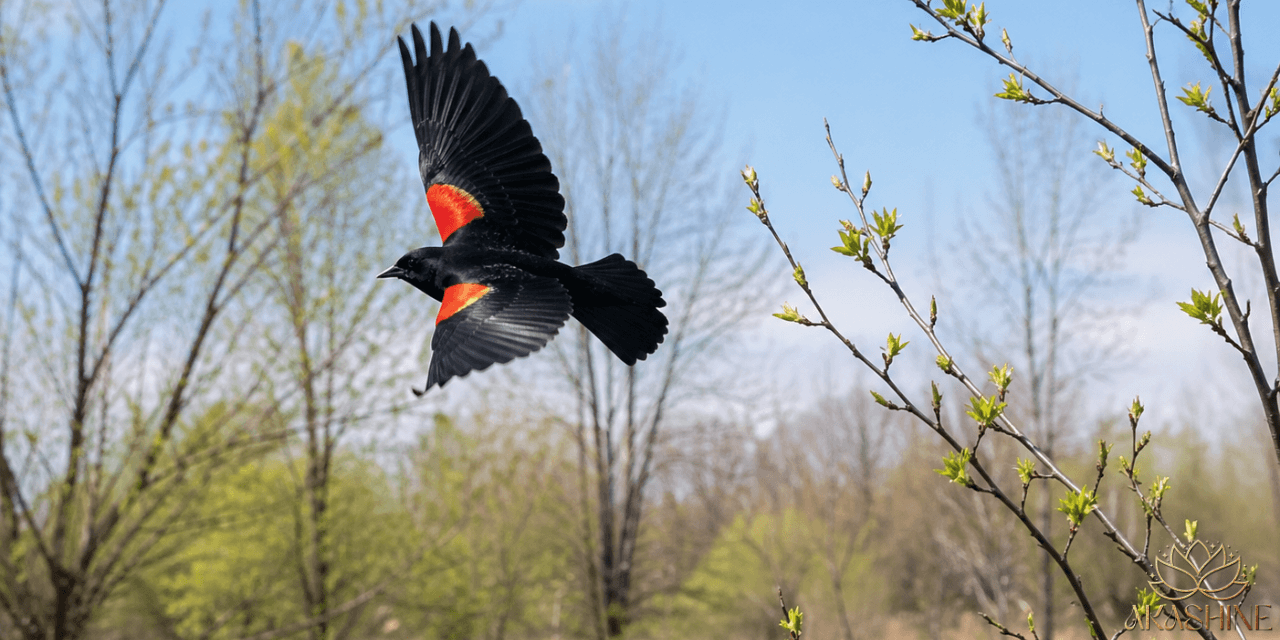
In my area, there is a bird called the red-winged blackbird, which has distinctive red markings on its wings that make it easily recognizable.
The first time I saw it, what stood out was precisely that visual contrast, but after paying more attention, what became more interesting was its behavior, particularly the way individuals respond to each other through vocalizations. These interactions are not random, but part of structured communication patterns used for territory, mating, and coordination.
From an ethological perspective, many bird species rely on complex signaling systems, and these forms of communication are efficient and adapted to their environment. In humans, although communication is more complex, there are parallels in how we respond to signals, both verbal and non-verbal.
Research in neuroscience and social behavior shows that humans continuously process subtle cues from others, often unconsciously, which influences reactions, decisions, and emotional states.
Observing these patterns in other species makes it easier to recognize that communication is a fundamental aspect of life systems, not something exclusive to human language.
From non-visible phases to visible outcomes
Spring can be understood as the phase in which processes that have been developing without visibility begin to manifest in a measurable way.
This applies not only to natural systems but also to personal and professional contexts, where results often depend on sustained effort that does not immediately produce feedback. The difficulty is that, without visible confirmation, it is common to interpret the process as ineffective.
However, when results appear, they tend to do so as a continuation of what was already in progress, not as something that started at that moment.
This perspective allows for a more stable approach to long-term processes, reducing the need for constant validation and making it easier to continue even when there are no immediate indicators of progress.
In that sense, what changes in spring is not the existence of growth, but its visibility.